
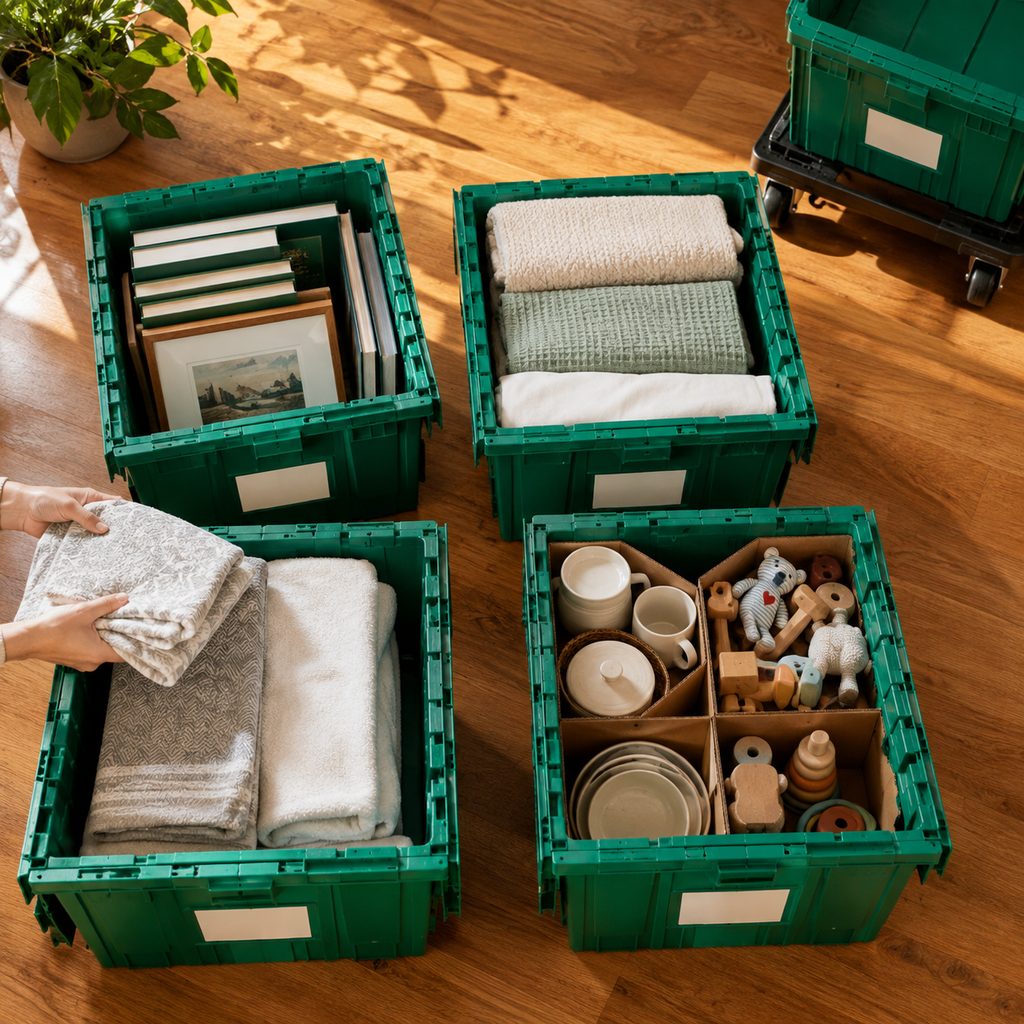
Nobody gets this right on the first try. Ask five people how many boxes a two bedroom takes and you will hear numbers between 20 and 80. Both ends are wrong for most people, and the person who guessed 20 is the one making a 9pm run to buy more while half the kitchen sits on the counter.
Here is the honest version, based on what actually goes out the door for Charlotte moves every week.
Start with the quick table
These counts assume a normal amount of stuff. Not minimalist, not hoarder. One person or a couple living a regular life with a closet, a kitchen they cook in, and some books.
| Home size | Boxes or totes | Add more if |
|---|---|---|
| Studio | 15 | You cook a lot or have real bookshelves |
| 1 bedroom | 25 | Two people share it, or there is a home office |
| 2 bedroom | 35 | A kid, a hobby, or a garage is involved |
| 3 bedroom house | 50 | Attic, basement, or a decade in the same place |
| 4 bedroom and up | 75 | Almost always. Round up here. |
Those are the same tiers our crate rental packages are built around, because after enough moves the pattern stops being a guess.
Room by room, what it really takes
Kitchen: 8 to 15
The kitchen is the single most underestimated room in any house. It looks like three cabinets. It is actually plates, bowls, glasses, mugs, mixing bowls, pots, pans, lids, sheet pans, small appliances, the drawer of utensils, the second drawer of utensils nobody talks about, and a pantry.
A one-bedroom kitchen runs 8 to 10. A family kitchen with a full pantry runs 15 and sometimes more. If you have never packed a kitchen before, read our kitchen packing walkthrough before you start, because the order you do it in matters more than the count.
Bedrooms: 5 to 8 each
Clothes are light and bulky, which means they fill volume fast without weighing much. Figure 3 to 4 for a closet, 2 for dresser contents, 1 for bedding, and 1 for nightstands and the pile of stuff on top of the dresser. Kids rooms skew higher because of toys.
Living room: 4 to 8
Less than people think, because the furniture is the furniture. What you are boxing is electronics, remotes and cables, decor, throw blankets, and whatever lives in the media console. Then the books.
Books: 1 per shelf foot, roughly
This is its own category on purpose. A full standard bookshelf, five shelves wide, is about 6 to 8 boxes on its own and they are heavy. Do not fill a box with books to the top. Half full, then top it off with something light like linens.
Bathrooms: 1 to 2 each
Small, but they add up in a three bath house. Half of it gets thrown away anyway.
Home office: 4 to 8
Papers, files, monitors, cables, and the drawer of old chargers. If you work from home this is closer to a small bedroom than most people expect.
Garage, attic, and storage closets: wildcard
This is where the count blows up. Holiday decorations alone are often 5 to 10. Tools, camping gear, sports equipment, paint. If you have a garage in Matthews or a walk-up attic in Plaza Midwood, add 10 to whatever number you landed on.
Apartment versus house changes the math
Two homes with the same bedroom count are not the same job. Apartments have less hidden storage, so the number tends to be tighter and more predictable. Houses have garages, attics, crawl space shelving, linen closets, and a hall closet full of things nobody has looked at since 2019.
A 2 bedroom apartment in South End is usually a clean 30 to 35. A 2 bedroom house in Elizabeth with a detached garage can easily hit 50.
The three things people always underestimate
- The kitchen. Every single time. Budget more than feels right.
- Closets. Not just clothes. Shoes, bags, bins on the top shelf, the vacuum, the wrapping paper. Closets are storage units with doors.
- Books, records, and paper. Heavy, dense, and they never fit in the containers you set aside for them.
A faster way to count than counting
Walk the house with your phone and do this in each room: open every closed door, including cabinets, and say out loud how many containers that room needs. Write it down. Add the numbers. Then add 15 percent.
That last step is not padding for its own sake. It covers the stuff you forget on the walkthrough, and running out mid-pack is far more expensive in time and stress than having four extras sitting empty.
Why running out is worse with cardboard
If you bought boxes, coming up short means another trip, another purchase, and boxes that do not match the stack you already built. With rented crates you can size up before delivery, and the extras just ride along. If you truly overshoot, that is fine too, since the price is per package rather than per container.
We deliver the crates stacked with dollies and reusable labels, you pack on your own schedule, and we collect from the new place when you are done. The whole process is four steps and none of them involve a cardboard recycling run.
Still not sure which tier you are
Pick the size that matches your bedroom count, then bump up one tier if any of these are true: you have lived there more than five years, you have a garage, or you cook seriously. Those three predict a bigger number better than square footage does.
If you want a second opinion, tell us your floor plan and how long you have been there and we will tell you what we would send. Otherwise, compare the package sizes and pick your delivery week whenever you are ready.